

Virginia Handicap Parking Permit Online Evaluations: HandicapMD Strengthens Compliance-First Review Standards
handicap placard virginia
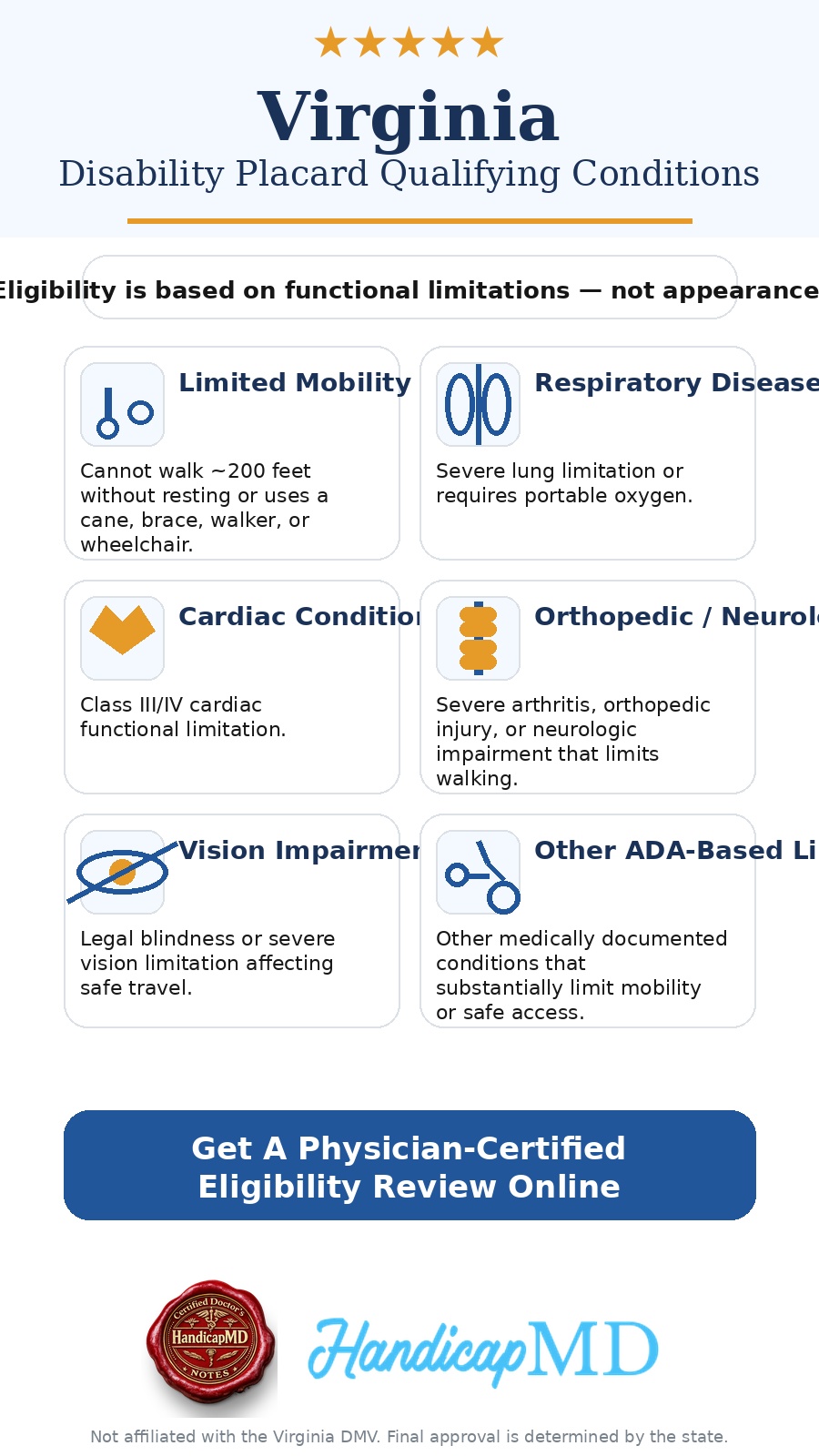
qualifying conditions for disability parking placard virginia
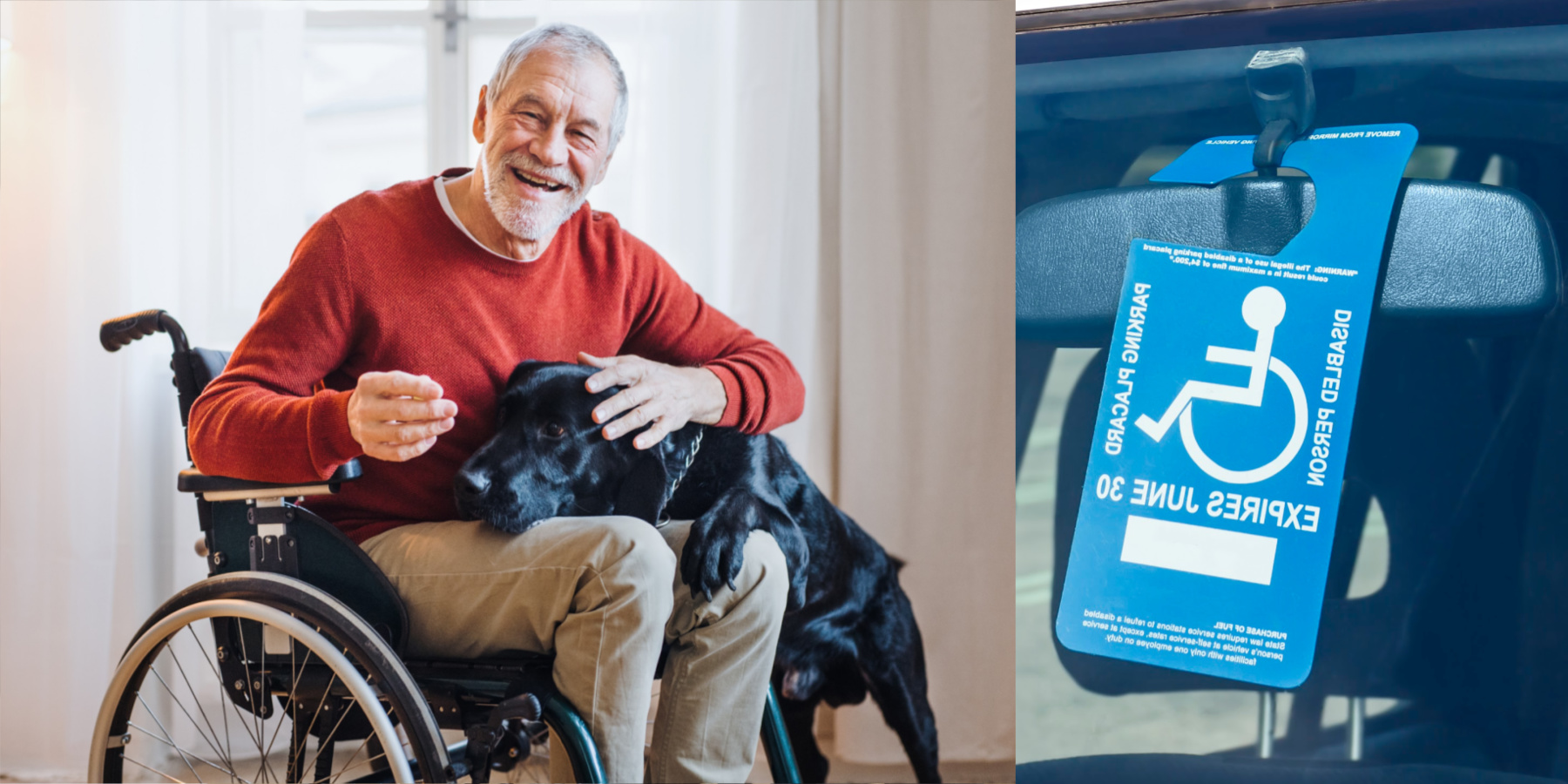
get disabled permit online

Handicap placard online

handicapmd disabled perking permit evaluations online
Virginia handicap parking permit online evaluations are supported by compliant clinical review DMV medical certification with clinician-led decision-making
“People seeking accessible parking are often dealing with pain, limited mobility, cardiopulmonary conditions, neurologic impairments, or recovery after surgery,” said Dr. Eric Jackson-Scott, MD, MPH, Medical Director. “Our responsibility is to evaluate each case carefully, document the functional limitations that matter for eligibility, and provide a complete medical certification when the clinical criteria are met—without shortcuts.”
A Compliance-First Model Built for Real-World DMV Requirements
Across the United States, disability parking placards and disability license plates are issued by official state or local authorities—not by telehealth platforms. HandicapMD’s role is to complete the medical certification portion—when appropriate—so an applicant can submit a properly certified application through the official process. In many cases, delays happen because forms are incomplete, records are missing, or functional limitations aren’t described in a way that matches what the application requires.
HandicapMD’s upgraded approach focuses on the most common breakdown points:
• Clear verification of identity and key intake details required for a medical evaluation
• Structured collection of symptom and functional-limitation history (walking tolerance, assistive device use, balance risk, exertional limits)
• Standardized medical-record prompts so patients know what to upload (imaging reports, operative notes, cardiology/pulmonary notes, PT notes, medication lists)
• Clinician-led review with a decision pathway that documents the rationale for approval or denial
• DMV-ready form completion and delivery steps so patients understand what happens next
This compliance-first posture is also aligned with what people search for statewide: “online handicap placard evaluation,” “medical certification for a disability parking placard,” “doctor for handicap placard,” and “how to get disability plates.” Those searches signal a need for clarity, legitimacy, and consistent steps—especially when an applicant is in pain or has limited mobility.
What “Compliance-First” Means in Practice
HandicapMD uses a clinical review framework that prioritizes functional limitation over diagnosis labels alone. Two people may share the same diagnosis while experiencing very different levels of impairment. The review standards emphasize:
Mobility limitation: inability to walk typical distances without stopping, severe pain with ambulation, or the need for assistive devices
Safety limitation: high fall risk, neurologic instability, or other conditions that make longer walks unsafe
Cardiopulmonary limitation: exertional intolerance that restricts walking distance and increases risk with extended ambulation
Temporary vs. permanent determination: expected recovery trajectory and time-limited restrictions when clinically appropriate
Applicants are guided through a structured intake that gathers the information clinicians actually need to make a defensible determination. That includes onset, severity, triggers, and relevant objective documentation when available. This reduces “back and forth” and supports timely completion of the medical provider certification when approved.
“Compliance-first isn’t about creating hurdles,” added Dr. Jackson-Scott. “It’s about protecting patients and the public by making sure the certification is accurate, complete, and tied to real functional limitations. When a person is eligible, they deserve a smooth experience. When they’re not eligible, they deserve a clear explanation.”
Improved Documentation Support for Faster Clinical Decisions
To minimize avoidable delays, HandicapMD expanded its documentation checklist and patient guidance. The platform now prompts users to upload relevant materials when they have them, such as:
• Orthopedic records: imaging summaries, operative reports, post-op restrictions, mobility status
• Cardiology or pulmonary records: test results, clinic notes, oxygen use, exertional limits
• Neurology records: gait instability documentation, strength/balance concerns, functional risk statements
• Physical therapy notes: walking tolerance, assistive device recommendations, functional status measures
• Medication lists: especially when treatment impacts exertion, balance, or sedation risk
Not every patient will have complete records at intake. When documentation is limited, clinicians may request additional information, recommend follow-up documentation, or determine that certification cannot be completed until the record is sufficient. This is part of the compliance-first promise: approvals should be well-supported, and denials should be explained in a way the patient can understand.
A Statewide Focus on Clarity: Placards, Plates, Temporary and Permanent Options
Disability parking credentials typically fall into categories that include temporary placards, permanent placards, and disability license plates. While the issuing authority defines credential types and durations, applicants often need simple guidance on what they’re applying for and why. HandicapMD’s updated educational resources provide plain-language explanations of:
• Temporary disability placard: time-limited mobility restrictions, post-surgical recovery, acute flares
• Permanent disability placard: chronic conditions with long-term limitations
• Disability plates: plate-based credentials often tied to vehicle registration and additional eligibility requirements
This education matters because “wrong-form” submissions and incomplete applications are among the most common reasons people get delayed. Better guidance helps eligible applicants submit correctly the first time.
Privacy, Security, and Patient Trust
Because medical certification involves protected health information, HandicapMD strengthened privacy-forward processes throughout the evaluation pathway. Intake uses secure submission protocols, and clinical review is performed by licensed clinicians who follow professional documentation standards. Patients receive clear instructions for how their certification is delivered and what to do next, including how to submit through the official issuing authority.
HandicapMD also emphasizes a critical point for consumers: a telehealth evaluation does not guarantee approval. Eligibility depends on clinical criteria and the information available for review. The company’s compliance-first approach is designed to ensure that approvals are meaningful, defensible, and consistent with the function-focused intent of accessible parking programs.
Why Online Evaluations Matter for Access
For people with significant mobility limitations, the hardest part of the process can be the process itself—driving, parking, waiting, and walking through multiple offices while already experiencing pain or shortness of breath. A secure telehealth disability evaluation can reduce that burden by allowing eligible applicants to complete clinical intake from home and share supporting documentation digitally.
Online evaluations can also support continuity of care by organizing the information used for certification: functional limits, assistive device needs, and the medical rationale behind the certification. When certification is completed appropriately, it can help the applicant move forward with the official application process more confidently.
Local Coverage Spotlight: Virginia Beach
Virginia Beach handicap parking permit online evaluations are a common search for residents who need faster access to clinician review while managing mobility limitations, chronic pain, or recovery restrictions, and HandicapMD’s statewide workflow is built to support applicants in major population centers like Virginia Beach—the state’s largest city by population.
World Population Review
+1
In Virginia Beach, residents often look for straightforward answers: What records should I upload? How does an online disability placard evaluation work? How quickly can the medical certification be completed? HandicapMD’s process is designed to meet those expectations with a structured intake, a clinician review that focuses on walking tolerance and safety, and a clear explanation of what the patient receives. When approved, the patient receives a completed medical certification they can use to apply for the official credential through the issuing authority’s published instructions.
The Virginia Beach workflow guidance emphasizes:
• Mobility and safety screening questions that reflect real-life limitations (distance tolerance, need for assistance, balance risk)
• Documentation prompts tailored to common scenarios, including orthopedic conditions, cardiopulmonary limitation, and neurologic impairment
• Clear communication on next steps so applicants understand submission requirements, timelines, and renewal considerations
For many residents, accessible parking is a quality-of-life issue. Being able to park closer can reduce pain flares, help prevent falls, and make medical visits, grocery trips, and family activities more manageable. The evaluation pathway is designed to support eligible people while maintaining compliance expectations for the program.
Local Coverage Spotlight: Chesapeake
Chesapeake handicap parking permit online evaluations are increasingly important for residents seeking a clinician-reviewed telehealth option that supports DMV-ready medical certification, and Chesapeake is Virginia’s second-most populous city.
In Chesapeake, many applicants are balancing busy schedules with real health limitations—post-operative restrictions, degenerative joint disease, heart or lung disease, or neurologic disorders that make longer walks unsafe. HandicapMD’s updated statewide process helps Chesapeake residents complete the clinical portion efficiently by clarifying what medical evidence is useful and by focusing the evaluation on functional impact.
Chesapeake-focused guidance highlights:
• Common documentation types that strengthen decision-making (PT notes, imaging summaries, specialist clinic notes)
• A practical approach to temporary versus permanent determinations based on clinical trajectory
• A clear statement of the platform’s role: medical certification when approved, not credential issuance
This clarity is important for consumer trust and for statewide search intent. People searching for “disability parking permit online evaluation” typically want both speed and legitimacy. HandicapMD’s compliance-first design aims to deliver both by keeping clinician review central to the process and emphasizing accurate, complete certification.
Practical Applicant Guidance: What to Expect and What You Receive
HandicapMD encourages applicants to approach the evaluation like a documentation-backed clinical visit. Before starting, applicants should be ready to explain:
• How far they can walk before needing to stop
• Whether they use a cane, walker, wheelchair, crutches, or another device
• Whether walking longer distances increases fall risk, severe pain, dizziness, or shortness of breath
• Whether the limitation is temporary (recovery window) or long-term
After clinical review, applicants generally receive one of two outcomes:
• If approved: a completed medical certification that supports the official application process
• If not approved: a clear result and guidance on what documentation might be needed or what next steps could clarify eligibility
HandicapMD does not issue placards, plates, or tags. The official issuing authority makes the final decision on issuance, credential type, and expiration dates.
Frequently Asked Questions (Statewide Search Intent)
Does HandicapMD issue disability placards or disability plates?
No. HandicapMD provides the medical certification portion of the application if approved. The official issuing authority issues the credential after the applicant submits the certified application through the official process.
Can the medical part be completed online?
In many cases, yes. The medical evaluation and certification step can be completed through a telehealth visit when clinically appropriate, supported by documentation and clinician review.
How long does it take?
Timing varies by case complexity and documentation. Straightforward cases with sufficient records can be reviewed quickly, while limited documentation may require follow-up.
Where can I park with a disability credential?
A valid credential generally allows use of designated accessible parking spaces when the eligible person is present. Meter and time-limit rules can vary by municipality, so applicants should follow posted signage and local guidance.
What about renewals and replacements?
Credential renewal timelines and replacement procedures are set by the issuing authority. HandicapMD’s resources help applicants understand common renewal scenarios and what to do if a credential is lost, stolen, or damaged.
HandicapMD’s public-facing resource pages and press materials are written to answer these queries in plain language, while avoiding repetitive phrasing that can reduce readability. The company’s approach is to use the main keyword strategically in the title, lead, and key headers—then rely on semantic variations elsewhere.
How the Online Evaluation Works (High-Level)
While steps may vary by individual case, the evaluation experience generally follows a predictable sequence:
Online intake: patients provide medical history, symptoms, and functional limitations
Documentation upload: patients submit available records that support the clinical review
Clinician review: a licensed provider evaluates eligibility based on function and evidence
Decision and certification: when approved, medical certification is completed; when not approved, the patient receives a clear outcome and guidance on next steps
Patient submission: the patient submits the certified application to the official issuing authority for the credential
This approach is designed to be transparent. HandicapMD does not claim to replace the issuing authority. The value is completing the clinical certification step properly and efficiently for those who qualify.
Common Conditions and Functional Limitations Considered
Disability parking eligibility is commonly tied to functional limitation rather than a single diagnosis. The compliance-first review model considers a range of conditions that may cause significant walking or safety limitations, including but not limited to:
• Severe arthritis and joint degeneration affecting ambulation
• Post-surgical recovery with temporary mobility restriction
• Neurologic disorders affecting balance, strength, or gait stability
• Cardiopulmonary disease limiting exertion and walking tolerance
• Severe pain conditions that meaningfully restrict walking distance
Clinician documentation focuses on what matters: how far a person can safely walk, whether they need an assistive device, and what risks occur with longer distances.
A Note on Timelines and Expectations
Many applicants ask how quickly the medical certification can be completed. Timing depends on clinical complexity and documentation availability. HandicapMD’s upgraded workflow is designed to reduce avoidable delays by setting expectations early and guiding users to upload the most helpful materials.
“Speed matters,” said Dr. Jackson-Scott. “But accuracy matters more. Our job is to certify responsibly. When we approve, we want the certification to stand up to scrutiny and to clearly reflect the patient’s functional reality.”
Quality Assurance and Clinical Oversight
HandicapMD’s statewide program includes clinician credential verification, standardized documentation templates, and internal quality checks intended to keep evaluations consistent from case to case. Each online disability placard evaluation is documented with the patient’s reported limitations, the supporting medical evidence reviewed (when provided), and the clinician’s rationale for the certification decision. This creates an organized record that helps patients understand their outcome and helps protect program integrity and maintain a consistent clinical standard across providers.
The compliance-first design also supports responsible access: it helps eligible people avoid unnecessary travel, reduces incomplete submissions, and discourages misuse by requiring a functional, evidence-based rationale for certification. For residents searching for a Virginia disability placard doctor online, the company’s message is straightforward—telehealth can be convenient, but it should also be clinically grounded today.
About HandicapMD
HandicapMD is a clinician-led telehealth platform that provides online medical evaluations for disability parking placard and disability plate applications. When an applicant meets clinical criteria, HandicapMD completes the medical certification portion required to apply through the official issuing authority. The issuing authority determines final issuance, credential type, and duration.
Ena Darron
HandicapMD
+1 833-368-3825
email us here
Qualifying Medical Conditions for Michigan Handicap Placard
Legal Disclaimer:
EIN Presswire provides this news content "as is" without warranty of any kind. We do not accept any responsibility or liability for the accuracy, content, images, videos, licenses, completeness, legality, or reliability of the information contained in this article. If you have any complaints or copyright issues related to this article, kindly contact the author above.
